Popular Posts

Showing posts with label Herbs. Show all posts

Sunday, September 21, 2014

What is Hibiscus tea and is it good for you?


Hibiscus tea is made with Hibiscus sabdariffa "petals"..... not really the petals of flowers but the sepals of the calyx that is formed around the seed pod.  These dried petals make a colorful tea that is tangy, lemony in flavor.  I like it best sweetened with stevia or a little honey. It is great in the summer with ice and lemon.

Hibiscus is excellent for flavoring herbal teas but has also been used for medicinal purposes. 

A study by the USDA which showed hibiscus decreasing high blood pressure in the test subjects. (Bliss, 2008)

Another Study from 2011 showed that hibiscus has anthocyanin a strong antioxidant that is also found in blueberries.  This particular study also discussed the drug-detox potential of hibiscus due to the constituents found in it. (Publication: Drug and chemical toxicologyPublication Date: 2011)

Anthocyanins help with memory, aging, oxidative stress, protect your heart, and have anti-inflammatory, anti-viral, and anti-cancer properties.

Side effects/warnings at http://www.hibiscusteabenefits.org/Side-Effects-of-Hibiscus-Tea.html 

I like to use it as part of a blend when I want a tart flavor profile, such at the Sereni-Tea we make.  

The possibilities are endless:

Cinnamon/Hibiscus
Lemon/Hibiscus
Orange/Clove/Hibiscus
Hibiscus/mint

To make a basic tea, use 1-2 tsp of dried hibiscus to 8 ounces of boiling water.  
  • Place dried "petals" in bottom of cup
  • Heat water to boiling a pour over petals
  • cover cup and let steep 10 minutes or more..the longer it steeps the more healthy properties infused into the cup
If you have a recipe or idea to share please feel free to comment.


Saturday, September 20, 2014

Hibiscus (Roselle)~ Hibiscus sabdariffa

I tried an experiment this year to see if I could grow my own Hibiscus for use in our hand made teas, one we call Sereni-Tea.  I normally purchase it from Mountain Rose Herbs but am always looking for ways to grow our own in our own soil.

This plant is also called a Roselle.  It originated in tropical areas and is also used for the fibers (rosella hemp) that the plant produces.  It is a member of the Malvaceae family which includes all kinds of mallows.  Okra, Cotton, and Cocoa are part of this family.

It is a misnomer that the hibiscus used in tea comes from the flowers.  It is actually the calyx that  surrounds the seed pod that is dried for tea. However the flowers, plant, root, and seeds can be eaten. It takes 11 pounds of fresh caylx to make 1 pound of dried Hibiscus.  The good thing is, one pound is a whole lot.

Roselle requires sunshine and lots of water to grow well. It can be grown as a summer crop in temperate regions.....like ours here in Tennessee.

Way back this spring I planted seeds, yesterday I was able to harvest some seed pods.  The  Roselle plant gets quite big........This is one plant, it's as big as a medium sized bush.


The seed pods ripen from the ground up.  This is because the plant flowers, continues to grow, and flowers on new growth.

This is a close up of the stems with the seed pods.   


Here is a close up of a seed pod that is surrounded by the calyx. They are a lovely burgundy, red color.

At this point they can be cut or picked from the plant and the caylx pulled from the seed pod.  I Pulled them and broke them up in strips......whatever your preference as far as size.  Place them on a tray and allow to
 dry completely before storing.


Here is a calyx/seed pod that I was pulling the calyx from.


This is the tray with the Roselle spread out to dry.


If you live in a temperate zone, this is not too hard so go ahead and give it a try.  If you have grown Roselle (Hibiscus sabdariffa) and have any more ideas or thoughts let me know.

Next post will be about using hibiscus in tea blends.

Thursday, August 21, 2014

Harvesting and drying rose hips

Rose hip

  • The rose hip, also known as rose haw or rose hep, is the fruit of the rose plant, that typically is red-to-orange, but ranges from dark purple to black in some species. Rose hips begin to form after successful pollination of flowers in spring or early summer, and ripen in late summer through autumn.


I picked the rose hips off our Rosa Rugosa bushes.  Truth is your supposed to wait until the first frost.  Rumor is that the frost makes them softer and sweeter.  Our rose hips were getting soft and some of them were starting to rot on the bush so I made a command decision and we picked them.

Bet you didn't know that picking them is the easy part, did you?  After you get them picked, you get to cut them open and take all the seeds out.  Did you know that rose hips have a TON of TINY seeds in them?  That little fact has been hammered home since it took FOREVER to de-seed them.  I was tempted to grumble but couldn't help but think of how high in vitamin C and how good they are in tea and how much I wanted to try out making rose hip seed oil.

What is the big deal you ask? Rose hip seed oil is full of vitamins, antioxidants and essential fatty acids that are known to correct dark spots and hydrate dry, itchy skin, all while reducing scars and fine lines.

I want to make some to try in our Rose Creme among other things. The actual rose hip seed oil on the market comes from wild roses that grow in Chile.  I'm telling myself that our rose hip seeds are just as good.  If they aren't they have to be close, right?  Next time you see me and my skin is glowing you will know why ;-)

BTW, I put the seeds in a jar with grapeseed oil and placed them in the sun to infuse.

Do you have any experiences with harvesting rose hips or making rose hip seed oil?  Any tips?

Sunday, August 3, 2014

Fermented Pesto

It has been a beautiful year for the garden.  Sun, warm days, rain, what more could we ask for.  I was a tiny bit "plant happy " this spring.  Not only did I plant lots of vegetables close together but I also planted maybe a few too many of one thing.  One of those would be basil.  We have basil coming out our ears.  In my opinion it is a good thing, my family is not so sure.  One of the ways we used it this year was to make fermented pesto.  In my opinion anything fermented has to be good for you.....right?  This was very good but did have a fermented flavor to it.  You will have to try it and let me know what you think.

You will need fresh basil, salt, garlic, whey, and spring water for this recipe.  I picked, washed, and drained the basil  leaves. Don't know if you all have this problem at your house but, it seems that every time our lawn gets mowed I have extra grass on my herbs and vegetables.


Place leaves without stems in quart jar, filling 3/4 full.  Add 1/4 cup whey (you can make this recipe without whey, you just ferment longer) place 3 cloves in jar (I used 6 in the second jar) add 1 tbsp sea salt, and fill jar with spring water  until just over the leaves.


Cover with a non-airtight lid.  I use a coffee filter and a rubber band. If you are using whey let sit out 2 days (if not using whey let sit out 12-14 days) then drain half the juice and place in blender. Blend with 1/2 cup walnuts and 1/2 cup Parmesan (we use goat cheese). Once blended slowly add 1/4-1/2 cup olive oil.  This pesto is a little more juicy than regular pesto, you can drain more juice off if you like a thicker consistency. We like it thinner when putting it in pasta and other recipes.....thicker for spreading on crackers.


Fermented Pesto
Fresh basil leaves~Approx 3 cups
1/4 cup whey
1 tbsp sea salt
3 cloves garlic (we like 6 cloves better)
1/2 cut walnuts (pine nuts)
1/2 cup parmesan cheese (soft goat cheese)
1/4-1/2 cup olive oil

Here is the the link to an old post about regular pesto if you want to try it.  http://raf6.blogspot.com/2012/08/pesto.html 
 

Friday, June 6, 2014

Herb harvest and storage

Things are growing like crazy around here.  I waited all winter to see this and revel in it. We have had warm days and rain, that is all it takes to make the plants take off.  I have been trying to stay ahead of the burgeoning growth but have to admit it is impossible this time of year to "get it all done".


It gives me such satisfaction to see the fruit of our labor, stored up and ready to be used to treat ailments or to increase our health. I have been chopping dried herbs and storing them and straining tinctures and glycerites that have been soaking. We make teas and tinctures for wellness and sickness both for us and for our animals. Prevention of illness for the animals and ourselves is a priority here.  I've found that dealing with prevention is much more pleasant than dealing with illness.

This is the time of year to dry the green, above ground parts of herbs.  Preferably right before they flower on a dry sunny day.  In the autumn I will harvest the roots I need.  I tend to take the cuttings mid-morning on a dry sunny day.  I bring them into the house and tie them up with twine and hang them under our stairs in the basement.  Most herbs need to dry out of the sun in a place with good air flow.  You can tell you have good herb quality when the herb is dry if it retains green color and has a good smell when crushed.  Once dried I store in clear glass jars.  If you are storing your herbs away from light you can use clear jars but if you are storing in the light you might want to consider colored jars for storage.  Just like spices, keep your herbs cool and dry to make help them last longer.


This is a picture of our wild bergomot before it blooms.  I have already cut it back and dried the branches twice.  I have enough for our needs so will let it bloom now for our enjoyment.


This is yarrow that we planted last year.  I have yet to harvest it....told you I was behind.  

I did a post on essential herbs to grow and their uses here http://raf6.blogspot.com/2013/02/my-essential-herbs-to-grow-list-part-1.html and here http://raf6.blogspot.com/2013/03/essential-herbs-to-growpart-ii.html.


For more information, contact us through our website at the top of the page.


Monday, March 18, 2013

If I could only pick 10 herbs from the essential list

Well that was a hard one but the ten I picked are the ones I use the most with the other essential herbs I grow (or want to grow)  not far behind.  So without further ado:

Comfrey
Echinacea
*Marshmallow
*Mullein
*Nettle
*Elder
*Raspberry
*Plantain
Calendula
*Yarrow

The starred herbs grow in the wild.  One thing about harvesting in the wild, make sure not to harvest plants that are growing right beside roadways since they will have all kinds of dust and toxins on them from passing cars.  Don't harvest every last plant, try to look to the future and leave plants to re-seed or grow for next year. 

Essential herbs to grow~Part II

I'm reading the old post and the list of herbs I have for this post and I'm realizing that I am creating quite a large list of herbs that are essential to grow.  I will continue this list but might summarize with the ten herbs I would not want to be without.  Keep in mind that many of these herbs grow right in your yard or in your neighborhood so keep your eyes open and know what they look like.


German ChamomileGerman Chamomile~ we dry this for tea, making an infusion for skin salves or deodorant, and in hand milled soaps


Dandelion : Yellow dandelions in a gardenDandelion~ we eat the greens in the spring, old timers would eat it in the spring when their larders were bare, before greens were growing in the garden.  It is known to be a tonic herb that works on the liver.  I use the root as a decoction for digestive issues and to clean out our liver and gallbladder. *can be wild harvested


Thyme~This is a versatile herb in that it can be used in many dishes for flavoring and for medicinal uses as well.  It is good for coughs and colds.  I use it in cold glycerites and my daughter make a herbal hair rinse with it for her hair.


Skullcap~ I have been trying to get this growing without any luck.  Hope to have some luck this year or find some to purchase this year.  I love to use this in cold tea since it helps relax the airways and decrease inflammation.  I have also used this in "Sleepy tea".  I want to grow this for harvest but have had to order it.


Passion flower~Sedative qualities make it useful for "sleepy tea". 
*Can be wild harvested


Milk Thistle seeds~Used for Liver/gallbladder cleansing and support.  The whole plant is high in antioxidants, minerals, and nutrients but can be invasive.  Be very careful where you plant it and keep it under control.  I have seedlings getting ready for transplant but am not sure yet where I want to plant it. *can be wild harvested


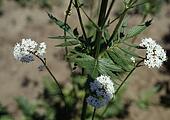
white yarrow picturesYarrow~Great for cold/flu especially when accompanied by a fever.  Will cause sweating when used therefore also considered a cleansing herb.  Historically it has been used to stop bleeding as well.  I only use it for my cold tea, adding it when one of the family is coming down with a "bad" cold and has a fever. *can be wild harvested


Hop_plant : hops garden, Czech RepublciValerian/Hops~Both these herbs have sedative qualities and are useful for sleep.  You might be asking why I have so many sedative herbs listed......I have a family member that has struggled with sleep issues for many years.  We have used various herbs (or combinations) at different times to combat his problems.


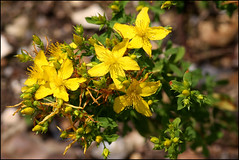
Square-stalked St. Johns Wort (Hypericum tetrapterum )St. Johns wort~I like to make an oil infusion with this herb and put it in salve.  You do have to be careful when using St. Johns wort because it can cause sun sensitivity, however, it is a very good wound healer.  It is used for other purposes such as pulmonary complaints, urinary complaints, and nervous conditions but we use it in salves here. * Can be wild harvested


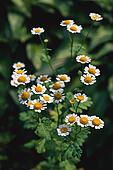
Feverfew~ Useful for headaches and looks nice in your flower garden.  We have used it mainly for headache curing properties in the past but it is also good for liver/gallbladder cleansing, fever reduction and a host of other issues.


Monday, February 25, 2013

My Essential herbs to grow list ~Part 1

Now that spring is around the corner I find my mind wandering more and more to the gardens and beds around the house that are being watered by the rain and warmed by the longer days.  I wander about looking to see what made it through the winter.  It will be some time yet before I know if all the herbs either re-seeded themselves or made it through the winter.  Either way my mind still plans for the growing season.  What else I might need to plant, what I might need to move,  and if I have enough of that herb growing for our usage.

There are many herbs that I like to have on hand for medicinal and culinary use.  Too me it is important to be able to grow, harvest, and use what I have right here at home without having to go out and buy it.  One reason is the expense to purchase organic well grown and harvested herbs, but the other is I know how it is grown and how fresh it is.

I thought I might provide a list of what I think is useful for our family and why.

Comfrey~Healing to wounds, bones, and ulcers.  I use it in salve and we drink it in teas.  We also use if for feed  and medicine for the animals.  It grows easily in sun to part shade and can be quite large and leafy as well as invasive so you might want to give it, it's own area to grow in.  Make sure to harvest the later leaves for drying and use. * In recent years it has been stated that comfrey damages your liver if taken internally* take at your own risk!


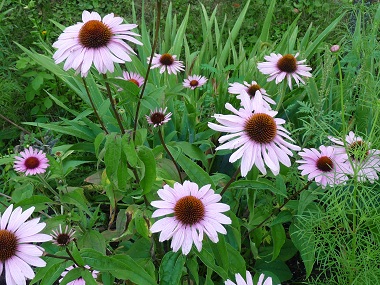
echinaceaEchinacea~ Angustofolia is better than Purpurea but I have not been able to find or seed a Angustofolia plant.  The echinacea purpurea that I grow, harvest, and use seems to work just fine.  It is pretty in the garden as well as good for immune system boosting.  I dig up the 2nd year roots, wash, cut up and dry them to make cold season glycerites and tincture for when we are coming down with a cold.  It grows in full sun the best.


Mints~ I use these mostly for flavoring the teas so that they are palatable.  It is good to settle upset stomachs and improves circulation when put in salves.  I liked the mint in the goat udder salve I made last year.  I also like to put Candy-Apple mint in bath water for a refreshing and relaxing bath.  If you are planting mint be very careful because it will take over any bed it is planted in.  Plant it in pots buried in the ground or give it an area to ramble on all by itself.  Mint can grow in full sun or partial shade. **Find mints along creek and river banks in the wild**


Marshmallow~I use the roots of this plant for it's mucilaginous properties.  It soothes, relaxes, and protects tissue so I use it a lot in Cold season glycerites and teas.  It likes some shade or will grow in full sun.  * *Can be harvested in the wild**


402228 - Large flowering mullein (Verbascum densiflorum)Mullien~We use it like Marshmallow in cold teas because it is mucilaginous.  The aerial parts and leaves are what I dry to use.  I don't currently have any growing here but will try to acquire some this year.  It is the tall plant in the picture on the left.
**Can harvest in the wild**


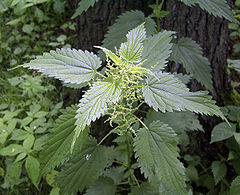
Nettle~You are probably thinking who in their right mind grows nettle on purpose.  Well I am hoping to this year.  I used to harvest it along the river where we used to live but with the move, I haven't been able to locate a place to get it other than mail order.  This is one herb I don't like to be without since it is loaded with vitamins, minerals, and enzymes that are great for your body.  One in particular is calcium.  It is excellent for detoxification and cleansing in the body.  We cook it and eat it like spinach in the spring, I have pickled it, and we dry it for teas.  When you cook it, the little silicon hairs that sting you drop off.  Make sure to use gloves when harvesting. **Can be Wild harvested**


Elderberry Flowerhead
Elder~ This is a shrub like tree that grows all over along fields and roadways.  It has large "pancake" like umbrels of white flowers that turn purple when ripe for harvesting.  This shrub is important to me because of the research that has shown it to be successful in decreasing or staving off the flu. I made Elderberry/Astragalus syrup this winter here http://raf6.blogspot.com/2012/11/flu-season-and-elderberry-astragalus.html.  Elder is a good immune system stimulant so I use the dried flowers in cold season teas and I make the berries into jams and syrups for use during cold and flu season.  I also put the flowers in healing salves.**Can be wild harvested**


Raspberry or blackberry leaves~We like the berries too but these are good for medicinal purposes as well.  I use the fresh leaves for the animals if they have loose stools and we dry leaves for teas.  Blackberry is good for diarrhea  and Red raspberry is a good blood builder and is used for strengthening the uterus in childbearing.  I have been known to give dried leaves to my goats when they are pregnant. **Can be Wild harvested**


English Lavandula angustifolia


Lavender~ Lavender is a lovely purple flower in the garden, a richly scented plant for soaps and salves, and for its medicinal purposes.  We gather the flowers and dry them for sachets and soap making and I make an oil infusion to use for healing salves.  Lavender like to grow in full sunFrench lavender is the strongest scented.  Has calming, soothing, sedative effect.  Good for headaches.


chickweedView a larger version of this image and Profile page for Plantago major L. 

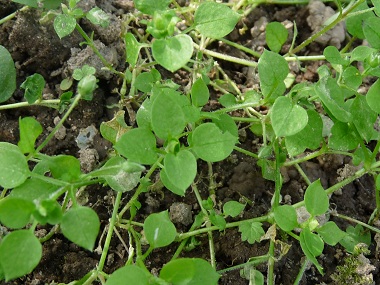
Plantian/Chickweed~These herbs grow wild in my yard and they are a main ingredient in my healing salves.  I like to make an oil infusion with them and then use the oil in my salves.  I would not want to be without these wonderful little weeds. Plantian is on the left and chickweed is on the right. **Most people can harvest form their yards**


Calendula~This bright orange flower is nice as an edging on a vegetable garden or just growing in a flower bed.  It likes full sun and re-seeds readily.  Once planted I never have to re-seed.  I just wait for the plants to start coming up and re-plant where I want it to grow.  This herb is great for skin issues and is used in baby lotions and salves because it isn't harsh.  I use it in soap, healing salve, and want to try it in face cream in the future.


This is half the list if herbs we like to grow and use, I will post Part 2 in the next couple of days.  Hope this is useful to someone.